
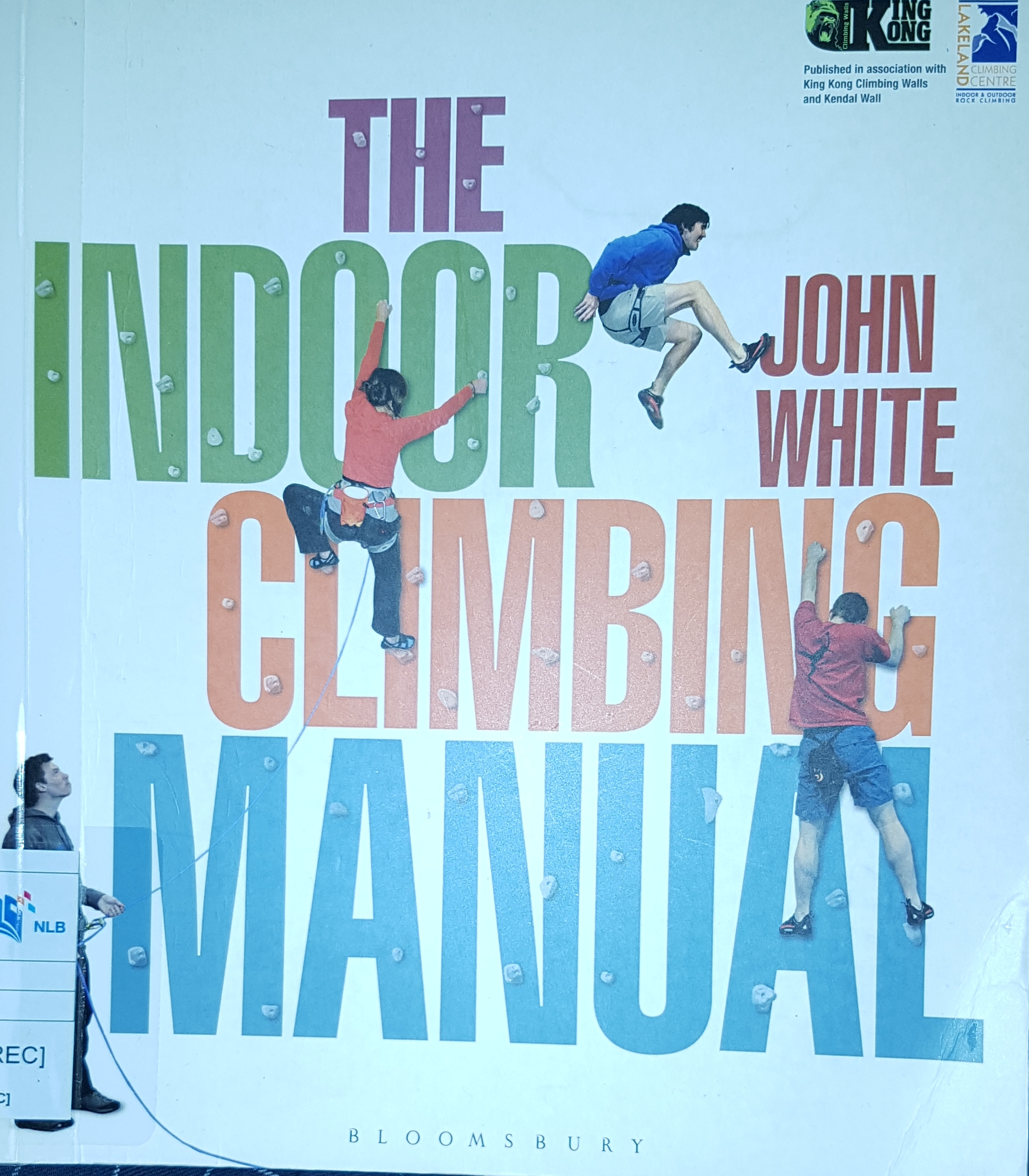
I picked this up from the library at the weekend, an attractive large format softback book with plenty of illustrations, and also several chapters on top-roped climbing, which I skipped completely because bouldering is where it’s at.
The most useful thing about this book, apart from the clear illustrations and not too overcooked text, is that about half way through they stop and lay out all the jargon they can think of. There are lucid explanations of what flagging is (using a limb to balance by moving it as a counterweight away from your body and across the wall), what a Gaston is (having your arm in the same position as if you were trying to prise apart the doors of a lift) and things like locking of, laybacking, toe- and heel-hooking, and so on.
It’s important to have jargon, because it’s more efficient than having to say every time “pull with your arms while leaning your weight in the opposite direction to increase the grip you have on a hold” and more importantly by giving something a name, you clarify that it is a thing, rather than just the accidental outcome of you flailing about. Once you know something has a name, you know you have something you can try to do, and do repeatedly, and improve at.
Similarly, going to the wall and watching people climb is a good way to learn, but if you can’t distinguish their mistakes from their intended movements, how do you sift the exemplary moves from the flailing about? Knowing when somebody mentions something that it means that particular thing in the universe makes it much easier to parse what you’re seeing.
It’s also good that this is explicitly for indoor climbing, so I don’t feel guilty for skipping irrelevant chapters on avoiding hypothermia, camping stoves and ice picks. Or that’s bad, if you like that sort of thing.
There are some things that contradict what I see in Singapore. It seems here that a figure-of-four is a reasonable thing to attempt, rather than climbing on the most difficult setting. (Or I’ve made a mistake about what I’m looking at.) There’s also advice to avoid training your grip for the first two years of climbing and I don’t know if that’s overly cautious or not, and the whole book talks only about British climbing with a few references to Fontaine blue, but as a easy technical reference it’s pretty good. I hope I don’t lose it in the move.